Staff Knowledge Check
Test your understanding with real-life scenario questions. Great for team discussion or self-check.
Q1. What is the primary purpose of a waterproof bedding protector?
- A) To make the bed warmer
- B) To improve airflow around the mattress
- C) To prevent fluid from reaching the mattress or duvet
- D) To decorate the bedroom
🎉 Correct! Waterproof protectors act as a barrier to shield bedding from incontinence, spills, or other fluids.
❌ Incorrect. Their purpose is protection, not temperature control.
❌ Incorrect. Some may offer breathability, but protection is key.
❌ Incorrect. Their main function is clinical, not aesthetic.
Q2. How are pillow protectors different from absorbent pads?
- A) They are smaller and warmer
- B) They are decorative only
- C) Pillow protectors prevent fluid entry; pads are designed to absorb it
- D) There is no difference
🎉 Correct! Protectors form a barrier, while absorbent pads soak up fluid.
❌ Incorrect. Size and warmth are not the primary difference.
❌ Incorrect. Protectors are highly functional.
❌ Incorrect. Their functions are very different.
Q3. Which of the following is most important when choosing continence bedding for home use?
- A) Machine washable and tumble dry safe
- B) Comes in a set of four
- C) Has a floral pattern
- D) Is heavier than a regular sheet
🎉 Correct! Ease of laundering is essential for home caregivers and families.
❌ Incorrect. Quantity is not the key feature.
❌ Incorrect. Design is secondary to function.
❌ Incorrect. Weight doesn't indicate effectiveness.
Q4. What is the benefit of breathable waterproof fabric in bedding protectors?
- A) It changes colour over time
- B) It traps heat inside
- C) It allows moisture vapor to escape, improving comfort while staying waterproof
- D) It reduces the noise of sheets moving
🎉 Correct! Breathable materials help reduce sweating while protecting from leaks.
❌ Incorrect. Colour change is not a functional benefit.
❌ Incorrect. Breathable fabrics aim to reduce heat buildup.
❌ Incorrect. Noise reduction may be a bonus, but not the primary reason.
Q5. Why might a clinician recommend a non-absorbent protector like a duvet cover instead of an absorbent underlay?
- A) Because absorbent layers increase laundry loads
- B) To protect higher-cost items like quilts that are hard to wash
- C) Because protectors are softer
- D) So the client doesn’t notice them
🎉 Correct! Duvets are often expensive and hard to clean—waterproof covers help extend their life.
❌ Incorrect. Laundry is a factor, but not the main reason for duvet protection.
❌ Incorrect. Absorbent aids can also be soft.
❌ Incorrect. Visibility is not the primary concern here.
Q6. What’s an advantage of using a zippered pillow protector over a standard pillowcase?
- A) It makes the pillow more stylish
- B) It helps retain fluffiness
- C) It provides a sealed barrier against moisture and spills
- D) It’s easier to iron
🎉 Correct! Zippered protectors fully enclose the pillow to block fluids and allergens.
❌ Incorrect. Appearance is not the main purpose.
❌ Incorrect. Fluffiness is not significantly affected.
❌ Incorrect. Ironing is not relevant for clinical use.
Q7. Why might breathable mesh corners be used in a duvet protector?
- A) To let heat escape without affecting waterproofing
- B) To add decoration
- C) To increase cost
- D) To hold it in place like a fitted sheet
🎉 Correct! Mesh corners provide ventilation, improving comfort without compromising protection.
❌ Incorrect. They serve a functional—not decorative—purpose.
❌ Incorrect. Breathable design improves comfort, not cost.
❌ Incorrect. These protectors typically zip, not stretch like fitted sheets.
Q8. What is a practical benefit of using non-absorbent protectors over absorbent layers?
- A) They look better
- B) They eliminate the need to wash thick items like doonas or pillows
- C) They come in brighter colours
- D) They weigh less
🎉 Correct! Non-absorbent waterproof covers reduce laundry burden by protecting hard-to-wash items.
❌ Incorrect. Aesthetic value is not the main goal.
❌ Incorrect. Colour is not clinically relevant.
❌ Incorrect. Weight alone is not the key advantage.
Q9. What is one reason a user might choose a fitted waterproof mattress protector over a flat pad?
- A) Fitted protectors are more absorbent
- B) Fitted protectors stay in place better throughout the night
- C) Flat pads are illegal in most states
- D) Fitted protectors are cheaper
🎉 Correct! Fitted styles reduce shifting and bunching, keeping the mattress protected reliably.
❌ Incorrect. Absorbency varies by product, not style.
❌ Incorrect. Flat pads are commonly used and not illegal.
❌ Incorrect. Price can vary, but that’s not the main factor.
Q10. What cleaning instructions are commonly associated with continence bedding protectors?
- A) Dry clean only
- B) Cold or warm machine wash and line or tumble dry
- C) Do not wash—discard after each use
- D) Hose off outside
🎉 Correct! Most are machine washable for convenience and hygiene.
❌ Incorrect. Dry cleaning is usually not required or suitable.
❌ Incorrect. These are reusable products.
❌ Incorrect. Hosing off is not recommended for hygienic care.
Q11. How does an absorbent underlay help manage incontinence at night?
- A) It replaces the need for bed sheets
- B) It absorbs urine and helps prevent skin irritation or bedding contamination
- C) It vibrates to wake the user
- D) It cools the mattress
🎉 Correct! Absorbent underlays provide a protective layer that manages moisture and protects skin and bedding.
❌ Incorrect. It is used in addition to sheets, not instead of them.
❌ Incorrect. These are passive products with no alert system.
❌ Incorrect. Absorbent aids don’t regulate temperature directly.
Q12. What client group is most likely to benefit from full bedding protection including mattress, pillow, and duvet covers?
- A) Teenagers in boarding school
- B) Clients with night-time incontinence or reduced mobility
- C) Adults with hay fever
- D) People who sweat during exercise
🎉 Correct! Clients at risk of night-time accidents or with limited mobility benefit from complete protection.
❌ Incorrect. Boarding school students may not need full protection unless clinically indicated.
❌ Incorrect. Allergy protectors are different from continence covers.
❌ Incorrect. Sweating during exercise is unrelated to bed protection.
Q13. What is a “stay-dry” surface used for in continence products?
- A) To repel water from external spills
- B) To keep the skin feeling dry by drawing moisture into the absorbent core
- C) To increase weight for stability
- D) To add softness only
🎉 Correct! Stay-dry linings wick moisture away from the skin to reduce irritation and discomfort.
❌ Incorrect. The purpose is moisture management, not just water resistance.
❌ Incorrect. Weight has no impact on absorption.
❌ Incorrect. It offers both comfort and functional fluid control.
Q14. Why might a continence product list include both reusable and disposable options?
- A) For colour variety
- B) Because disposable options are always better
- C) To meet different user preferences and care environments
- D) To confuse the buyer
🎉 Correct! Some users prefer reusable options for sustainability, while others need disposable aids for convenience.
❌ Incorrect. Colour isn’t the driving factor.
❌ Incorrect. Neither type is always “better”—they suit different needs.
❌ Incorrect. The goal is to offer flexible solutions.
Q15. What’s one reason to choose a washable continence underlay instead of a disposable pad?
- A) They smell better
- B) They are always larger
- C) They can reduce long-term costs and environmental waste
- D) They dissolve in the wash
🎉 Correct! Washable products are reusable, saving money and reducing landfill waste over time.
❌ Incorrect. Scent is not a reliable factor.
❌ Incorrect. Sizes vary between product types.
❌ Incorrect. These are designed to survive machine washing.
Q16. What should staff check before recommending a continence product for a client?
- A) The colour and brand preference
- B) The client's mobility, continence level, and caregiver support
- C) Whether the client likes cotton
- D) The client's favourite television show
🎉 Correct! It's essential to match the product to the client's continence needs, transfer ability, and support available.
❌ Incorrect. Colour may be a factor, but not clinically essential.
❌ Incorrect. Fabric preference is less critical than functionality.
❌ Incorrect. This is irrelevant to the product choice.
Q17. What does “fluid-resistant” typically mean on a bedding product label?
- A) It will never get wet
- B) It can resist some fluids for a short time but may not be waterproof
- C) It will dissolve when wet
- D) It is meant for pool use
🎉 Correct! Fluid-resistant means the product can handle small spills or moisture but may not fully protect against larger volumes.
❌ Incorrect. No product is guaranteed to stay 100% dry forever.
❌ Incorrect. It won’t dissolve.
❌ Incorrect. These are not designed for aquatic use.
Q18. How often should washable continence aids be laundered?
- A) Only if they look dirty
- B) Once a month
- C) After each use or exposure to moisture
- D) Never—they clean themselves
🎉 Correct! To maintain hygiene and skin safety, washable products should be cleaned after each use.
❌ Incorrect. Contamination may be invisible.
❌ Incorrect. Monthly cleaning is not frequent enough.
❌ Incorrect. They require regular laundering.
Q19. What might happen if continence aids are not properly dried after washing?
- A) They become too soft
- B) They shrink to doll-size
- C) They can develop bacteria or mildew, reducing hygiene and safety
- D) They become water-resistant
🎉 Correct! Damp products can harbour harmful bacteria or mildew.
❌ Incorrect. Drying does not affect softness in this way.
❌ Incorrect. That’s not a realistic outcome.
❌ Incorrect. Improper drying does not add waterproofing.
Q20. Why might a carer choose a disposable bed pad over a reusable one in certain settings?
- A) To save on detergent
- B) For faster turnover in clinical or travel environments
- C) To make beds look whiter
- D) Reusables are illegal in hospitals
🎉 Correct! Disposable pads offer convenience when laundry access is limited or quick changes are needed.
❌ Incorrect. Cost of detergent isn't the main factor.
❌ Incorrect. Colour appearance isn't relevant here.
❌ Incorrect. Reusable aids are widely used in hospitals.
Q21. What feature makes a continence underlay suitable for overnight use?
- A) Decorative stitching
- B) High absorbency and stay-dry surface
- C) Lightweight feel only
- D) Colour-coordinated backing
🎉 Correct! Overnight use requires effective absorption and comfort to protect skin and bedding for extended periods.
❌ Incorrect. Appearance is not the key consideration.
❌ Incorrect. Light feel alone doesn't ensure performance.
❌ Incorrect. Colour doesn't impact function.
Q22. What is one benefit of having tuck-in flaps on a reusable bed pad?
- A) Adds extra absorbency
- B) Allows the pad to double as a pillow
- C) Keeps the pad securely in place overnight
- D) Helps identify the product brand
🎉 Correct! Tuck-in flaps help prevent the pad from bunching or moving during use.
❌ Incorrect. Absorbency is determined by the pad core, not the flaps.
❌ Incorrect. These are not designed for dual use.
❌ Incorrect. Branding is not the purpose of flaps.
Q23. What can happen if continence bedding is not changed after an episode of incontinence?
- A) The product will become waterproof
- B) The user may experience skin irritation or infection
- C) The bedding will clean itself overnight
- D) The pad will dry on its own and be ready to reuse
🎉 Correct! Prolonged contact with moisture can cause skin breakdown or infection.
❌ Incorrect. The product’s properties don't improve with exposure.
❌ Incorrect. These products need to be cleaned manually.
❌ Incorrect. Soiled pads should not be reused without washing.
Q24. How do continence products support a client’s dignity and independence?
- A) By being completely hidden under clothes
- B) By reducing the need for frequent clothing or bedding changes
- C) By replacing the need for assistance entirely
- D) By increasing supervision
🎉 Correct! Proper continence aids help maintain comfort and reduce disruptions for the client.
❌ Incorrect. While discretion helps, function is key.
❌ Incorrect. They may reduce but not always eliminate the need for support.
❌ Incorrect. The aim is to reduce dependence, not increase oversight.
Q25. What should be included in caregiver training for using continence products?
- A) Product colours and marketing slogans
- B) Proper placement, hygiene, laundering, and disposal techniques
- C) Fabric selection based on room decor
- D) Ignoring manufacturer instructions
🎉 Correct! Training should include all handling, usage, and care aspects to ensure safety and effectiveness.
❌ Incorrect. Branding is not clinically important.
❌ Incorrect. Style is secondary to function.
❌ Incorrect. Manufacturer guidelines ensure safe and appropriate use.
Q26. What is the primary role of a waterproof backing on a continence bed pad?
- A) To make it non-slip on tiled floors
- B) To prevent moisture from leaking through to the mattress
- C) To make it more colourful
- D) To increase the pad's softness
🎉 Correct! Waterproof backings stop fluids from soaking into bedding or mattresses.
❌ Incorrect. These pads are meant for beds, not floors.
❌ Incorrect. Appearance is not the main purpose.
❌ Incorrect. Softness depends on the top layer, not the backing.
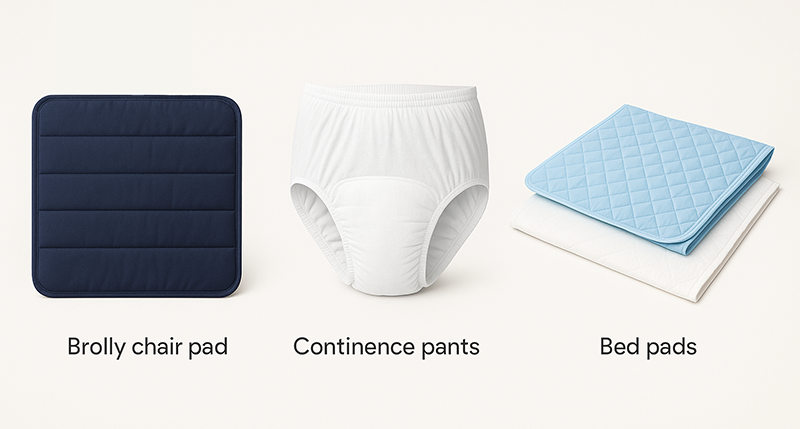
Q27. Which continence product is best suited for protecting lounge chairs or wheelchairs?
- A) A full-sized mattress protector
- B) A small seating pad with waterproof backing
- C) A single-use glove
- D) A shower cap
🎉 Correct! Chair-sized pads are ideal for seated users and prevent furniture contamination.
❌ Incorrect. A mattress protector is too large for this use.
❌ Incorrect. Gloves are not a continence product.
❌ Incorrect. Shower caps are unrelated to seating protection.
Q28. When should a caregiver replace a continence pad on a bed or chair?
- A) After it has reached full absorbency or been soiled
- B) Only once a week
- C) When the client leaves the home permanently
- D) Every 10 minutes
🎉 Correct! Pads should be changed when they are soiled or full to maintain hygiene and comfort.
❌ Incorrect. Weekly changes are not sufficient for continence care.
❌ Incorrect. Pads should be changed regularly, not just during transitions.
❌ Incorrect. Over-frequent changes are unnecessary unless the pad is soiled.
Q29. What design feature in continence products helps reduce odour?
- A) Fragrance beads
- B) Odour-neutralising layers or treatments
- C) Thicker material
- D) Waterproof zippers
🎉 Correct! Many continence products incorporate odour-control technology in their layers.
❌ Incorrect. Fragrance alone does not neutralise odour effectively.
❌ Incorrect. Thickness doesn’t determine odour control.
❌ Incorrect. Zippers may prevent leaks but don’t address odour.
Q30. What role does a waterproof fitted sheet play in continence management?
- A) It replaces the need for a mattress
- B) It protects the mattress from fluid damage during accidents
- C) It reduces the absorbency of other aids
- D) It acts as a heater
🎉 Correct! These sheets are designed to shield mattresses from leaks while remaining comfortable to sleep on.
❌ Incorrect. The sheet is used with a mattress, not instead of one.
❌ Incorrect. It enhances protection, not reduces it.
❌ Incorrect. Heating is not its function.
Q31. What makes a chair pad suitable for use in a car?
- A) It plugs into the cigarette lighter
- B) It is compact, waterproof, and sits flat on the seat without slipping
- C) It matches car upholstery
- D) It folds into a steering wheel cover
🎉 Correct! Travel-friendly chair pads offer discreet protection in vehicles without shifting or leaking.
❌ Incorrect. These aids are passive, not powered.
❌ Incorrect. Matching décor is not essential.
❌ Incorrect. It’s not designed for steering wheels.
Q32. What is the benefit of a multi-layer design in a continence pad?
- A) It adds unnecessary bulk
- B) It provides structure for folding into different shapes
- C) It enhances absorbency, comfort, and skin protection
- D) It creates loud rustling sounds
🎉 Correct! Multi-layer designs improve fluid management and user comfort.
❌ Incorrect. Layers are carefully chosen for performance, not bulk.
❌ Incorrect. These are not meant to be folded into shapes.
❌ Incorrect. Rustling would be a flaw, not a feature.
Q33. What is the purpose of a PVC mattress protector in continence care?
- A) It adds weight to the bed
- B) It prevents fluid from soaking into the mattress
- C) It makes the bed more fashionable
- D) It helps with bed mobility
🎉 Correct! PVC barriers are waterproof, preventing damage to mattresses from leaks or spills.
❌ Incorrect. Weight is not the function.
❌ Incorrect. Aesthetic design is not the primary concern.
❌ Incorrect. These protect, not assist with mobility.
Q34. Why is it important to regularly inspect continence bedding products for wear and tear?
- A) To check if colours have faded
- B) To make sure the waterproofing and absorbency still function properly
- C) To compare with competitor products
- D) To ensure it still matches the room’s theme
🎉 Correct! Damage can reduce the effectiveness of fluid protection or compromise hygiene.
❌ Incorrect. Fading doesn’t affect function.
❌ Incorrect. Comparison is not the purpose of inspection.
❌ Incorrect. Function over fashion!
Q35. What makes a continence product "clinical grade"?
- A) It comes in a hospital-coloured box
- B) It is certified or manufactured to meet specific healthcare standards for hygiene and performance
- C) It is more expensive
- D) It is sold only online
🎉 Correct! Clinical grade products are rigorously tested for use in healthcare environments.
❌ Incorrect. Box colour doesn’t determine grade.
❌ Incorrect. Cost does not define quality or certification.
❌ Incorrect. Distribution method is not a determining factor.
Q36. What is the most important reason to use continence aids in aged care settings?
- A) To reduce laundry detergent use
- B) To support infection control, comfort, and dignity
- C) To keep staff busy
- D) To reduce electricity usage
🎉 Correct! Continence aids are essential for preserving skin integrity, comfort, and overall well-being.
❌ Incorrect. Laundry reduction is a benefit, but not the primary reason.
❌ Incorrect. Staff productivity is unrelated.
❌ Incorrect. Electricity use isn't a driving factor.
Q37. Which of the following is true about reusable continence pads?
- A) They can be used indefinitely without washing
- B) They require regular washing and proper drying to maintain hygiene
- C) They are disposable by design
- D) They must be dry-cleaned only
🎉 Correct! Proper laundering ensures longevity, absorbency, and hygiene.
❌ Incorrect. Hygiene would be compromised.
❌ Incorrect. Reusables are not intended to be disposable.
❌ Incorrect. They are usually machine-washable, not dry-cleaned.
Q38. What is a key difference between a chair pad and a bed pad?
- A) Chair pads are edible
- B) Chair pads are smaller and designed to fit onto seats
- C) Bed pads are scented
- D) Bed pads float in water
🎉 Correct! Chair pads are sized for wheelchairs, recliners, and dining chairs.
❌ Incorrect. Definitely not!
❌ Incorrect. Scent is not a defining feature.
❌ Incorrect. These aren’t buoyancy aids.
Q39. Why might a carer choose to layer a fitted waterproof sheet and a bed pad together?
- A) To double the laundry
- B) For enhanced protection and easier changes if soiling occurs
- C) Because the pad will melt without the sheet
- D) For decorative effect
🎉 Correct! This setup allows quick pad changes while preserving the mattress and sheet.
❌ Incorrect. It can actually reduce laundry by protecting layers below.
❌ Incorrect. Pads do not melt.
❌ Incorrect. Appearance is not the reason.
Q40. What makes a continence pad "suitable for bariatric users"?
- A) A wider and longer surface area for better coverage
- B) It's made of titanium
- C) It has a built-in air freshener
- D) It vibrates when wet
🎉 Correct! Bariatric-friendly pads offer additional surface area and higher absorbency for comfort and protection.
❌ Incorrect. Titanium is not used in pad materials.
❌ Incorrect. Air fresheners are not standard features.
❌ Incorrect. Vibration is not a common feature.
Q41. Why is skin integrity a key concern in continence management?
- A) Wet skin heals faster
- B) Prolonged exposure to moisture can cause irritation and pressure injuries
- C) Skin integrity doesn’t matter with bedding products
- D) Washing more often prevents all skin issues
🎉 Correct! Moisture and friction can cause breakdown, rashes, and infection.
❌ Incorrect. Wet skin is at higher risk of damage.
❌ Incorrect. Skin health is always a concern.
❌ Incorrect. Cleaning is important, but prevention is key.
Q42. What does “wicking” mean in a continence aid?
- A) It repels water from the surface
- B) It draws moisture away from the skin into absorbent layers
- C) It hardens when wet
- D) It creates a scent when activated
🎉 Correct! Wicking fabrics improve comfort by keeping the skin dry.
❌ Incorrect. Wicking absorbs and moves moisture, not repel it.
❌ Incorrect. Wicking doesn't make the product harden.
❌ Incorrect. It’s about fluid control, not scent.
Q43. What is the benefit of using coloured pads or backing on continence products?
- A) Easier identification and rotation of products
- B) Decoration only
- C) Indicates waterproofing is no longer working
- D) Signals product expiry
🎉 Correct! Colour coding can help track use, laundry, and types of pads.
❌ Incorrect. Colour often serves a practical purpose.
❌ Incorrect. Colour doesn't indicate failure.
❌ Incorrect. These products don't expire based on colour.
Q44. What kind of clients might benefit most from a high-absorbency bed pad?
- A) Those with light perspiration
- B) Clients with high-output incontinence or overnight needs
- C) Clients with allergies
- D) Clients who never sleep in a bed
🎉 Correct! Higher absorbency is ideal for heavy fluid episodes or extended sleep.
❌ Incorrect. Sweat is not the main use case.
❌ Incorrect. Absorbency isn't allergy-specific.
❌ Incorrect. Clients who don’t use beds won’t use bed pads.
Q45. How often should reusable continence products be checked for damage?
- A) Never — they last forever
- B) After each wash and before reuse
- C) Once per year
- D) Only when a client complains
🎉 Correct! Routine inspection prevents failures and protects the client.
❌ Incorrect. No product lasts indefinitely.
❌ Incorrect. This would miss signs of wear.
❌ Incorrect. Proactive checks are essential.
Q46. Why is it important that continence pads lay flat during use?
- A) For aesthetic purposes
- B) To prevent fluid pooling and discomfort
- C) To help the pad fold better in storage
- D) To avoid it blowing away outdoors
🎉 Correct! Flat pads ensure even absorbency and reduce risk of leakage or irritation.
❌ Incorrect. Comfort and function matter more than looks.
❌ Incorrect. Storage doesn’t relate to this point.
❌ Incorrect. Pads are used indoors and anchored under clients.
Q47. Which continence aid might be best for someone who spends most of their day in a recliner?
- A) A tall shower commode
- B) A compact chair pad with waterproof backing
- C) A mattress protector
- D) A wool blanket
🎉 Correct! Chair pads protect seating surfaces from accidents and are discreet for recliners.
❌ Incorrect. Commodes are for toileting, not ongoing seating.
❌ Incorrect. This is more suited for beds.
❌ Incorrect. Wool blankets do not manage fluid.
Q48. What makes continence chair pads particularly helpful for transport and outings?
- A) They can be worn as hats
- B) They are portable, discreet, and protect public seating
- C) They inflate like cushions
- D) They must be installed with tools
🎉 Correct! Chair pads support confidence and cleanliness when clients leave home.
❌ Incorrect. Definitely not headwear.
❌ Incorrect. They are flat absorbent layers, not inflatable.
❌ Incorrect. No installation required.
Q49. How does breathable backing help in continence products?
- A) It prevents all moisture from entering the product
- B) It allows air flow while still blocking leaks, reducing sweat and discomfort
- C) It makes the pad more slippery
- D) It helps the pad grow plants
🎉 Correct! Breathable layers help regulate temperature and reduce skin irritation.
❌ Incorrect. It manages airflow, not blocks all moisture movement.
❌ Incorrect. Slipping is not a desired feature.
❌ Incorrect. It’s not a gardening product.
Q50. What should be done with a reusable continence aid that has lost waterproofing or absorbency?
- A) Use it as a beach towel
- B) Retire it from continence care and replace it
- C) Keep using it but double up with another aid
- D) Sell it online
🎉 Correct! If a continence aid no longer functions, it must be replaced to ensure client protection.
❌ Incorrect. It’s no longer fit for absorbent use.
❌ Incorrect. Improvised layering is not recommended.
❌ Incorrect. Used care items should not be resold.